Flexible Polyurethane Warehouse Protection: An Effective Alternative to Steel Barriers
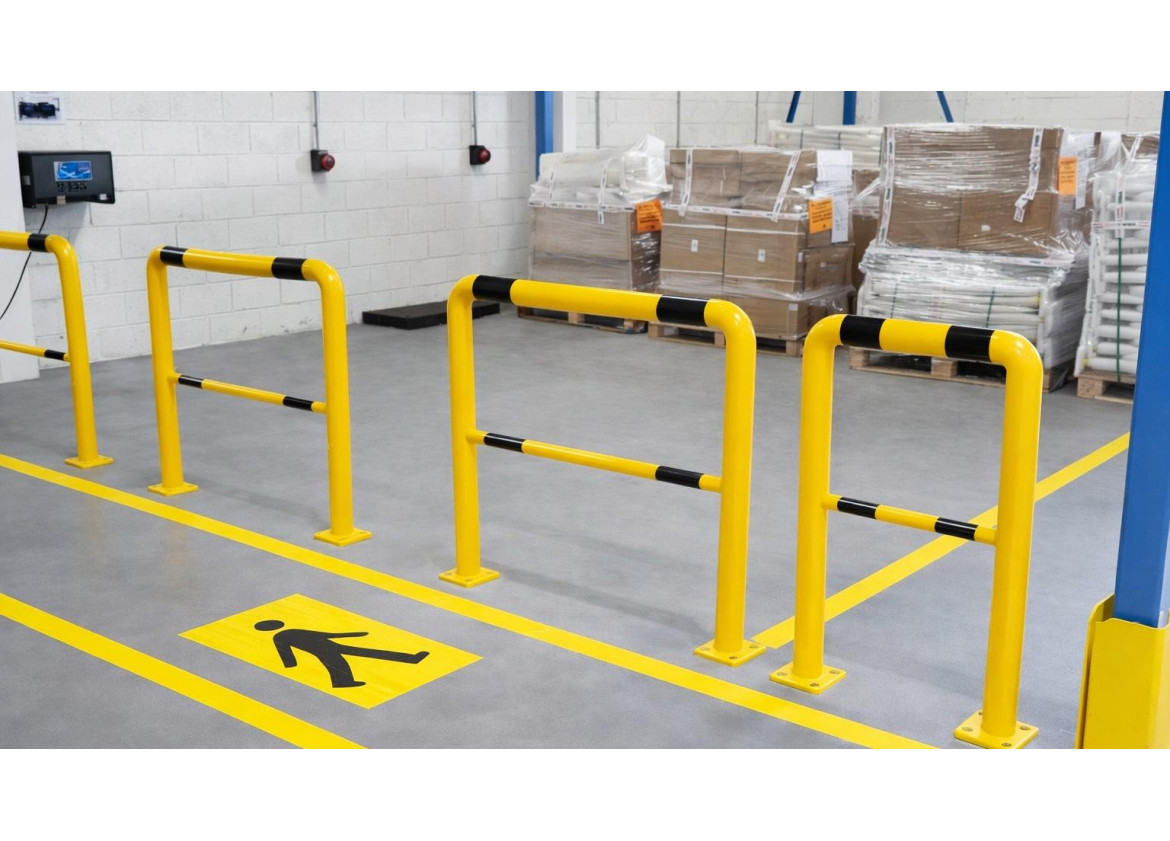
In a warehouse environment, collisions between forklifts, storage racks, and building structures are common. For many years, companies relied mainly on steel protection barriers to limit damage. Today, however, flexible polyurethane warehouse protections are increasingly seen as a highly effective alternative.
Flexible Polyurethane Warehouse Protection: An Effective Alternative to Steel Barriers
In a warehouse environment, collisions between forklifts, storage racks, and building structures are common. For many years, companies relied mainly on steel protection barriers to limit damage. Today, however, flexible polyurethane warehouse protections are increasingly seen as a highly effective alternative.
The principle behind these protections is simple: absorb the impact instead of transferring it. By dissipating the energy generated during a collision, they help reduce material damage and improve safety in high-traffic warehouse areas.
This shift is changing the way modern logistics facilities protect their infrastructure.
Why steel warehouse protections show their limits
Steel barriers have long been considered the most durable option for warehouse safety. They are strong and capable of withstanding significant impacts.
However, steel warehouse protections are rigid. When a forklift hits them, the impact energy is transferred directly to the ground or structural elements.
In practical terms, this can lead to:
-
Deformation of anchor fixings
-
Cracks in the concrete floor
-
Frequent repair of equipment and infrastructure
In many cases, the protection works, but the damage is simply transferred elsewhere. This limitation is precisely why more companies are turning to flexible protection systems.
How flexible polyurethane protections work
Industrial protections made from flexible polyurethane operate differently from rigid steel systems.
Instead of resisting the impact with rigidity, the material absorbs the shock through controlled deformation. When a vehicle hits the barrier, the structure flexes slightly and then returns to its original shape.
This process dissipates the energy of the collision, significantly reducing damage to:
-
The vehicle
-
The protection system
-
The surrounding infrastructure
This behavior is especially beneficial in areas where frequent low-impact collisions occur, such as warehouse aisles, storage zones, and traffic intersections.
Essentially, what could become an expensive impact is transformed into a simple cushioned contact.
Better protection for warehouse infrastructure
Modern warehouses represent major investments in infrastructure. Storage racks, machinery, structural columns, and partition walls must remain intact to ensure operational safety.
Flexible warehouse barriers and protection systems create a buffer zone between vehicles and structures, helping preserve these installations.
Unlike rigid steel systems, flexible materials reduce stress on anchor points and concrete flooring, which can significantly lower maintenance requirements.
Over time, this approach often helps reduce repair costs and extend the lifespan of infrastructure.
An important advantage for operator safety
Human safety is a critical priority in logistics environments. Areas where forklifts operate must be carefully protected to prevent accidents involving pedestrians.
Flexible polymer warehouse protections are often used to separate pedestrian zones from vehicle circulation areas.
In the event of an impact, the flexible structure absorbs part of the collision energy. This reduces the risk of sudden structural deformation or dangerous projections, helping create a safer working environment for operators.
The result is improved accident prevention while maintaining efficient warehouse traffic flow.
Highly visible and easy to integrate
Another advantage of flexible protection systems is their high visibility. They are typically manufactured in contrasting colors such as yellow and black, making risk areas easy to identify.
These high-visibility logistics protections act not only as barriers but also as visual signals that help forklift operators identify limits and sensitive areas.
This visual warning often prevents collisions before they occur.
A solution adapted to modern warehouses
Warehouses continue to evolve. Logistics flows are faster, volumes are increasing, and traffic density within facilities is growing.
As a result, warehouse protection equipment must also evolve.
Flexible polyurethane protections meet these new requirements by offering high resistance while absorbing repeated impacts.
They help:
-
Protect warehouse infrastructure
-
Improve operator safety
-
Reduce maintenance and repair costs
This combination of strength and flexibility explains why they are increasingly used in modern logistics platforms and industrial facilities.
In Same Category
Related by Tags
Comments
No comment at this time!
Leave your comment