- New
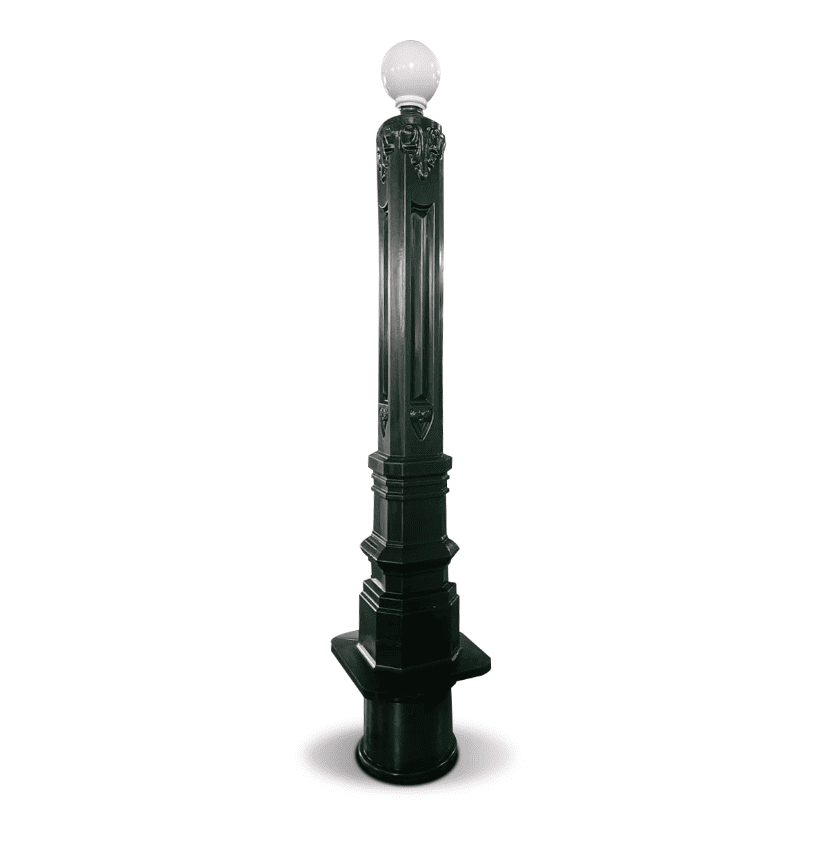
The Place du Midi disabled access bollard combines the robustness of memory-foam polyurethane with full compliance with accessibility requirements for people with reduced mobility. Its contrasting white flat top ensures optimal visual detection for visually impaired users, while its generous above-ground height of 1,160 mm provides a strong, confident presence in public spaces. In the event of a vehicle impact, it absorbs the shock and automatically returns to its original shape — without breaking, without intervention, without replacement.
The Place du Midi disabled access bollard combines the robustness of memory-foam polyurethane with full compliance with accessibility requirements for people with reduced mobility. Its contrasting white flat top ensures optimal visual detection for visually impaired users, while its generous above-ground height of 1,160 mm provides a strong, confident presence in public spaces. In the event of a vehicle impact, it absorbs the shock and automatically returns to its original shape — without breaking, without intervention, without replacement.
 Besoin d'un conseil ?
Contactez nous au 01 77 18 08 61 ou contact@idequip.com
 Expédition 24/48h
Pour tous les produits en stock
 Devis rapide et gratuit
Recevez le dans la journée
The Place du Midi disabled access bollard combines the robustness of memory-foam polyurethane with full compliance with accessibility requirements for people with reduced mobility. Its contrasting white flat top ensures optimal visual detection for visually impaired users, while its generous above-ground height of 1,160 mm provides a strong, confident presence in public spaces. In the event of a vehicle impact, it absorbs the shock and automatically returns to its original shape — without breaking, without intervention, without replacement.
Manufactured to order in any shaft colour, it integrates into any visual identity and meets the regulatory requirements of accessible public spaces, from town centres to public facilities.
The white flat top is the defining feature of equipment compliant with disabled access standards. Its contrasting colour against the bollard shaft enables immediate detection by visually impaired users and white cane users, in line with signalling requirements for accessible public spaces. This makes the Place du Midi disabled access bollard the reference solution for all installations subject to accessibility obligations — public buildings, public roads and regulated pedestrian areas.
At 1,160 mm above ground — nearly 20 cm taller than standard 1,000 mm bollards — the Place du Midi disabled access bollard is clearly identifiable from a vehicle, even at moderate speed and in congested areas. Its slender silhouette, with a 110 mm shaft widening to 172 mm at the base, gives it visual and structural stability while occupying minimal ground space.
Memory-foam polyurethane is the benchmark material for urban bollards exposed to manoeuvring vehicles. Unlike concrete or steel, which fracture or permanently deform, this material absorbs the energy of the impact and elastically returns the bollard to its original upright position — automatically, with no intervention required. This property is permanent and does not diminish over time or with repeated impacts.
In high-exposure locations — delivery zones, car parks, parking exits, shop frontages — this represents significant long-term savings on replacement and maintenance costs.
The Place du Midi disabled access bollard is manufactured to order and can be produced in any shaft colour to suit the project's requirements, while the white flat top is always retained to meet accessibility standards. From standard street furniture shades to institutional or fully custom colours, each order is tailored to your visual identity. Contact us to submit your request and receive a quote with production lead time.
Both models are identical in dimensions, material, weight and fixing system. The only difference is the top: the standard version has a free design in the chosen colour, while the disabled access version features a contrasting white flat top meeting the signalling requirements for people with reduced mobility. The disabled access version is the preferred choice wherever accessibility regulations apply or where detection by visually impaired users is a safety criterion.
| Model | Place du Midi Disabled Access |
| Material | Memory-foam polyurethane |
| Top | White flat top – disabled access compliant |
| Total height | 1,360 mm |
| Height above ground | 1,160 mm |
| Diameter | Ø 110 mm (shaft) / Ø 172 mm (base) |
| Weight | 10 kg |
| Fixing | Cast-in |
| Shaft colour | All colours available made to order |
| Use | Outdoor and indoor |
Yes. The white flat top meets the visual contrast requirements defined in accessibility standards for public spaces. It enables effective detection by visually impaired users and white cane users, in line with obligations applicable to public buildings and accessible public roads. For projects in the UK, it is recommended to verify compliance with the relevant local accessibility guidelines (such as BS 8300 or equivalent).
Yes. Memory-foam polyurethane absorbs the energy of the impact and elastically returns the bollard to its original upright position. This property is permanent — it does not diminish with the number of impacts or with the ageing of the bollard.
The bollard is designed to be cast into a concrete or asphalt base. For existing asphalt surfaces, core drilling followed by resin anchoring is the recommended method. For new construction, the bollard can be set directly during the concrete pour.
All shaft colours can be produced to order, with the top always remaining white to comply with disabled access requirements. From standard shades to fully custom colours matching your visual identity. Contact us for a quote and the applicable production lead times for your order.
Yes. Memory-foam polyurethane resists UV, frost, freeze-thaw cycles, heat and permanent moisture. It does not crack, does not fade prematurely and requires no particular maintenance once installed — even in coastal areas or at altitude.
Data sheet
No customer reviews for the moment.